"Visit a sacred site of devotion and culture."
The Mahalaxmi Temple Kolhapur, also known as Shree Ambabai Temple, is one of Maharashtra’s most sacred Shaktipeethas and a place where spirituality meets centuries-old heritage. Devotees from across India visit the shrine to seek blessings of Goddess Ambabai, the presiding deity of prosperity, courage, and fulfillment. With a history that spans more than 1,400 years, the temple stands as a timeless representation of devotion, architecture, and cultural legacy.
If you are planning a Kolhapur Mahalaxmi darshan, this complete guide will help you understand the temple’s timing, history, rituals, darshan options, and tips for a comfortable visit.
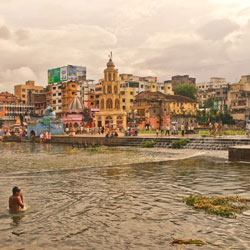
Situated on the banks of the Panchganga River, the temple is dedicated to Goddess Mahalaxmi—an incarnation of Adi Shakti. Kolhapur, steeped in tradition and royal heritage, is regarded as one of India’s major pilgrimage hubs. The temple attracts lakhs of devotees every year, especially during Navratri, Kirnotsav, and Fridays, considered highly auspicious for the Goddess.
Unlike many temples where Goddess Lakshmi is worshipped alongside Lord Vishnu, here she is the main deity, making Kolhapur a spiritually exceptional destination. Devotees believe that visiting the shrine frees them from financial troubles, fulfills wishes, and brings mental calm.
The history of the temple is deeply rooted in ancient Indian texts and inscriptions. It is believed that the original sanctum (Garbhagriha) was built during the reign of the Chalukya dynasty in the 7th century CE. Over the centuries, various rulers—including the Shilaharas, Yadavas, Kadambas, and Marathas—expanded and renovated the temple complex.
7th Century CE – Built by Chalukya Kings, known for advanced Dravidian architecture.
11th–12th Century – Renovations under Shilahara rulers, who added intricate stone carvings.
Maratha Era – Further enhancements under the patronage of Chhatrapati Shahu Maharaj.
British Period – Preservation and structural protection efforts increased due to its growing popularity.
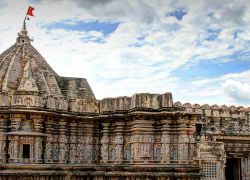
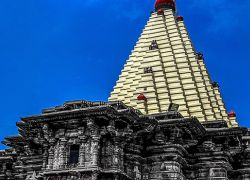
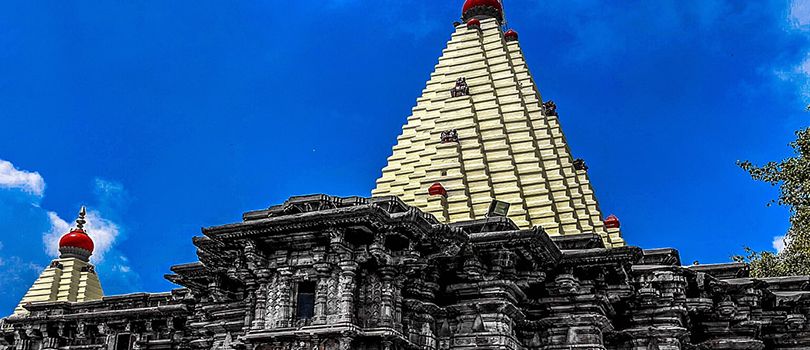
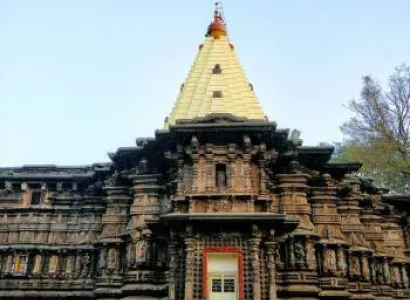
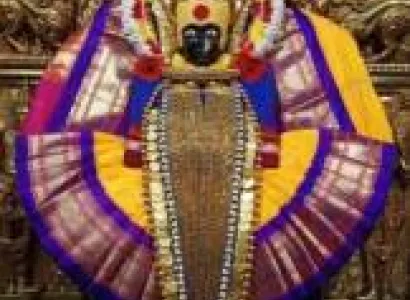
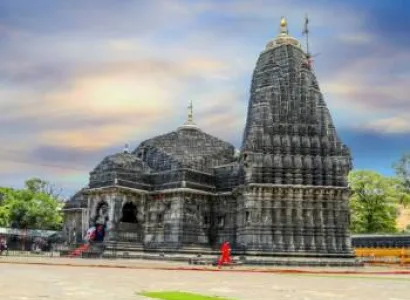
The temple retains its original black stone architecture decorated with carvings of gods, goddesses, dancers, and mythological figures. The idol of Ambabai is carved from a single black stone and is nearly 3 feet high. She holds a mace, shield, fruit, and bowl—symbolizing power, protection, prosperity, and nourishment.
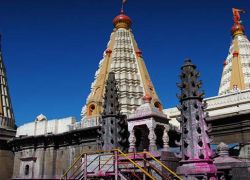
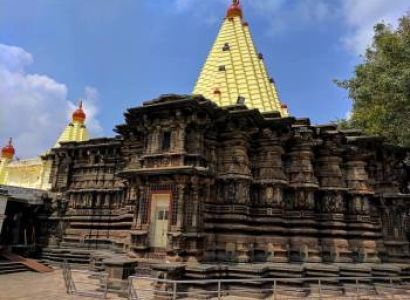
The Mahalaxmi Temple is an outstanding example of Hemadpanthi architecture, which uses locally sourced black stone and lime. The layout consists of:
Garbhagriha (Sanctum) – Houses the deity with a deepstambh (lamp tower).
Mandaps (Halls) – Used for prayers, gatherings, and daily rituals.
Mahadwar – A grand entrance with carved pillars.
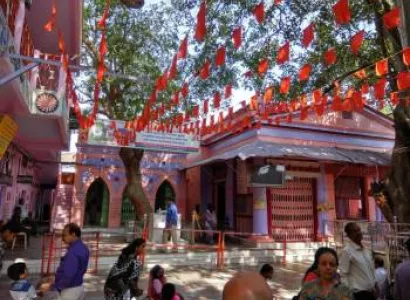
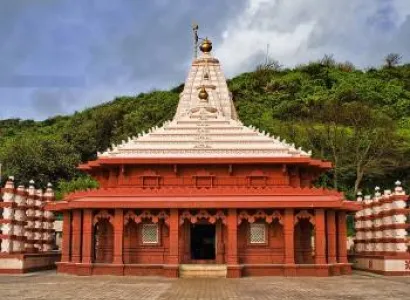
Shrines of Mahakali, Saraswati, Ganapati, Dattatreya, and Shiva – Representing unity of divine forces.
A remarkable architectural phenomenon is the Kirnotsav—the “Festival of Sun Rays”—celebrated twice a year when the setting sun’s rays fall directly on the idol of Ambabai. This natural alignment showcases the astronomical mastery of ancient Indian architects.
(Includes keyword: kolhapur mahalaxmi darshan timing)
To help devotees plan conveniently, here are the standard darshan hours:
Temple Opens: 4:00 AM
Kakad Aarti: 4:30 AM
Morning Darshan: 5:00 AM – 12:30 PM
Temple Closed: 12:30 PM – 1:00 PM
Temple Reopens: 1:00 PM
Evening Darshan: 1:00 PM – 8:00 PM
Dhoop Aarti: 8:00 PM
Shej Aarti (Closing Aarti): 10:00 PM
Note: Timings may vary during festivals, Navratri, or special poojas.
(Includes keyword: mahalaxmi kolhapur online darshan)
For devotees who cannot visit in person, the temple offers online pooja booking and virtual participation in daily rituals. Services include:
Online Darshan streaming
E-pooja and prasad delivery
Booking for Abhishek, Archana, and special sevas
Donation and temple welfare contributions
These services help devotees stay connected with the temple from anywhere in the world, ensuring spiritual continuity even from a distance.
(Includes keyword: kolhapur ambabai live darshan)
The temple management provides live darshan on official platforms, especially during major festivals. The live-streaming setup allows devotees to watch the morning and evening aartis, special rituals, and festive celebrations in real time. It is especially beneficial for elderly devotees and those living outside Maharashtra.
The temple follows ancient rituals that have been performed for centuries. Visitors can participate in:
Abhishek
Alankaar
Naivedya
Archana
Aarti
Navratri – 9 days of celebration with grand decorations and cultural events.
Margashirsha Fridays – Extremely auspicious for Mahalaxmi devotees.
Kirnotsav – Sun-rays festival held in January and November.
Diwali – Temple glows with thousands of lamps and special Aarti.
Chaitra Purnima – Mass attendance and spiritual gatherings.
The temple holds immense importance in Hindu beliefs. Some reasons devotees consider a visit spiritually transformative include:
Goddess Mahalaxmi symbolizes wealth, abundance, and stability. Devotees believe their financial struggles ease after seeking her blessings.
It is believed that the temple stands where the “Maha-Shakti” energy resides eternally.
The ambience of the temple, combined with sacred chants and Aartis, creates a calming environment.
Visitors experience centuries-old architecture, legends, and cultural traditions.
Kolhapur is well-connected through national highways from Pune, Satara, Belgaum, and Goa. State buses, private cabs, and tourist coaches are easily available.
Kolhapur Railway Station (C. Shahumaharaj Terminus) is 5–6 km from the temple with daily trains from Mumbai, Pune, Bengaluru, and Hyderabad.
The nearest airport is Kolhapur Airport, around 10 km away.
Auto-rickshaws, buses, and ride-hailing cabs are available 24×7 around the temple.
Visit early morning to avoid long queues.
Dress modestly per temple guidelines.
Keep mobile phones on silent; photography inside sanctum is restricted.
Special queues are available for senior citizens.
Avoid peak timings on Fridays and festival days unless you want to participate in rituals.
Book accommodation in advance during Navratri and Margashirsha month.
The Mahalaxmi Temple Kolhapur is not just a religious destination—it is an enriching blend of ancient architecture, divine energy, and cultural grandeur. Whether you visit for Kolhapur Mahalaxmi darshan, join online darshan, or watch Kolhapur Ambabai live darshan, the presence of Goddess Ambabai brings peace, prosperity, and spiritual upliftment.
This temple stands as a timeless symbol of Maharashtra’s devotion, architectural brilliance, and rich heritage. Anyone visiting Kolhapur must experience the beauty and divinity of this sacred Shaktipeetha at least once in their lifetime.






















Kolhapur
Kolhapur
Kolhapur
Kolhapur
Kolhapur
Kolhapur
Kolhapur
Kolhapur
Kolhapur
Kolhapur