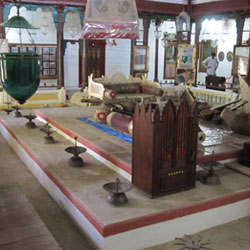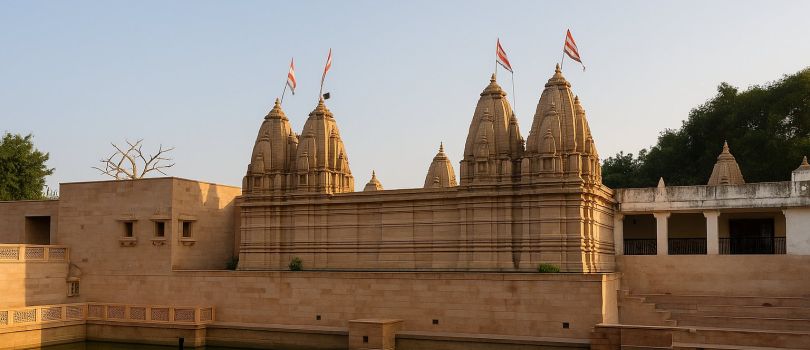
"Experience spiritual serenity at a sacred lake."
Bindu Sarovar is a sacred and historically significant water tank located near Patan in Gujarat, specifically in the town of Siddhpur. It is considered one of the holiest places in India, especially for performing Hindu rituals for ancestors. This serene and spiritual destination holds immense religious importance and attracts pilgrims from across the country.
Bindu Sarovar is not just a water body but a place deeply connected with ancient traditions, mythology, and cultural practices. Surrounded by temples and ghats, the site offers a peaceful atmosphere that makes it ideal for spiritual reflection and religious ceremonies.
Why Famous for Bindu Sarovar, Patan, Gujarat?
Bindu Sarovar is famous for being one of the five sacred sarovars (water tanks) in India. It is especially known for performing Matru Shraddh, a unique ritual dedicated to mothers who have passed away.
Unlike other places where rituals are performed mainly for fathers or ancestors, Bindu Sarovar holds a special place for honoring mothers, making it spiritually unique.
The site is also known for its calm environment, religious significance, and historical importance, attracting both devotees and tourists.
History of Bindu Sarovar, Patan, Gujarat
The history of Bindu Sarovar dates back to ancient times and is mentioned in Hindu scriptures. According to mythology, it is believed that Lord Vishnu shed tears (bindu) here for humanity, which led to the formation of the sarovar.
The place has been a center for religious rituals and ceremonies for centuries. It is closely associated with the sage Kardama Rishi and his wife Devahuti, who are important figures in Hindu mythology.
Over time, the site developed into a major pilgrimage center, with temples and ghats constructed around the water tank.
Architecture of Bindu Sarovar
The architecture of Bindu Sarovar is simple yet spiritually significant, focusing on functionality and religious practices.
Key features include:
• Sacred Tank: A well-maintained water reservoir.
• Stone Ghats: Steps leading down to the water for rituals.
• Surrounding Temples: Dedicated to various Hindu deities.
• Open Courtyards: Space for performing ceremonies.
The layout is designed to facilitate religious activities and provide a peaceful environment for devotees.
Things to Do at Bindu Sarovar, Patan, Gujarat
Visitors can engage in several meaningful activities:
1. Perform Rituals: Conduct Matru Shraddh and other ceremonies.
2. Visit Temples: Explore nearby religious sites.
3. Meditation: Spend quiet time in spiritual reflection.
4. Photography: Capture the serene surroundings (where permitted).
5. Cultural Learning: Understand Hindu traditions and beliefs.
Entry and Visit Details
Entry Fee: Entry to Bindu Sarovar is free.
Visit Duration: Visitors usually spend around 1 to 2 hours, depending on rituals performed.
Facilities: Basic facilities such as priests, पूजा materials, and seating arrangements are available.
Visitors are expected to maintain respect for religious practices and follow guidelines.
Timings of Bindu Sarovar
The site is open throughout the day. However, morning hours are considered the best time for rituals and peaceful visits.
Weather at Bindu Sarovar, Patan, Gujarat
The climate in the region is as follows:
Summer (March to June): Hot, with temperatures up to 42°C.
Monsoon (July to September): Moderate rainfall.
Winter (October to February): Pleasant, with temperatures between 10°C and 25°C.
Winter is the best time to visit Bindu Sarovar.
How to Reach Bindu Sarovar, Patan, Gujarat
By Air: The nearest airport is Ahmedabad Airport, about 110 km away.
By Train: The nearest railway station is Siddhpur Railway Station, located very close to the site.
By Road: Siddhpur is well connected by road to Patan, Mehsana, and Ahmedabad. Buses, taxis, and private vehicles are easily available.
Bindu Sarovar is located in Siddhpur, around 35 km from Patan, and can be reached easily by local transport.
Interesting Facts about Bindu Sarovar
• It is one of the five sacred sarovars in India.
• It is specially known for Matru Shraddh rituals.
• It is associated with Lord Vishnu’s tears.
• It has been a pilgrimage site for centuries.
Travel Tips for Bindu Sarovar
• Wear modest and respectful clothing.
• Visit early morning for rituals.
• Carry water and sun protection.
• Follow guidance from priests during ceremonies.
• Maintain cleanliness and respect the sacred site.
Conclusion
Bindu Sarovar near Patan is a deeply spiritual and culturally rich destination that holds a special place in Hindu traditions. Its unique significance for honoring mothers, combined with its peaceful environment, makes it a must-visit place for pilgrims and travelers. A visit to Bindu Sarovar offers not only religious fulfillment but also a deeper understanding of India’s ancient traditions.


































Patan
Patan
Patan
Patan
Patan
Patan
Patan
Patan
Patan