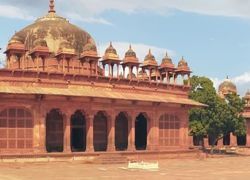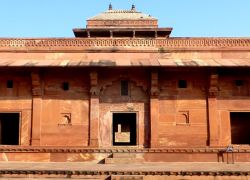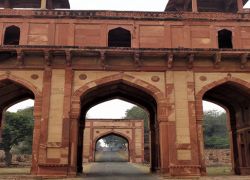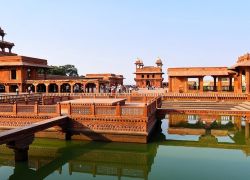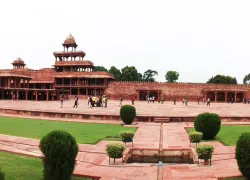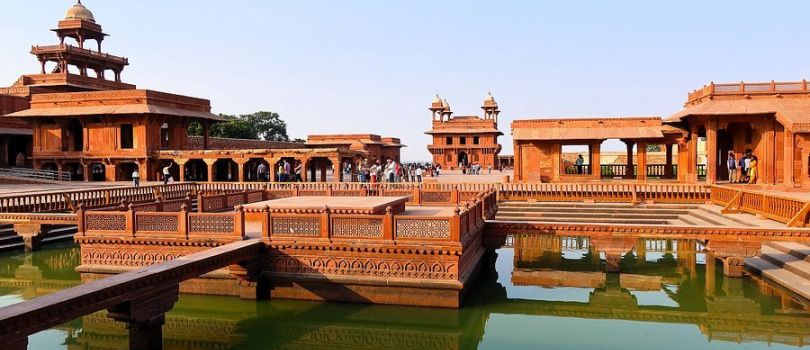
"Explore the architectural marvel of Mughal heritage."
Panch Mahal is one of the most fascinating and architecturally unique monuments within the historic city of Fatehpur Sikri in Uttar Pradesh. Built during the reign of the Mughal Emperor Akbar in the 16th century, this five-storied palace stands as a remarkable example of Mughal architecture blended with influences from Persian, Hindu, and Buddhist styles. Located near the famous Diwan-i-Khas and Jodha Bai's Palace, Panch Mahal is one of the most visited attractions in Fatehpur Sikri, a UNESCO World Heritage Site.
The structure was designed as a pleasure palace and a place for relaxation, offering stunning views of the surrounding royal complex and landscape. Unlike other Mughal buildings, Panch Mahal is an open pavilion supported by numerous intricately carved pillars. Its unique design, historical significance, and elegant architecture attract history enthusiasts, architecture lovers, photographers, and tourists from across the world.
Why is Panch Mahal, Fatehpur Sikri Famous?
Panch Mahal is famous for its extraordinary five-tiered architectural design and its role as a royal leisure pavilion during the Mughal era. The monument resembles a Buddhist temple or pagoda and stands out among other Mughal structures due to its open and airy layout.
The palace is known for:
Historians believe that Panch Mahal was used by the women of the royal household for relaxation, entertainment, and enjoying cool evening breezes while maintaining privacy.
History of Panch Mahal, Fatehpur Sikri
Panch Mahal was constructed during the reign of Emperor Akbar around 1570–1585 as part of the grand city of Fatehpur Sikri. Akbar established Fatehpur Sikri as his capital after the Sufi saint Sheikh Salim Chishti predicted the birth of his heir, Prince Salim, who later became Emperor Jahangir.
The city became the center of Mughal administration, culture, and architecture for a brief period. Panch Mahal was one of the important structures built within the royal palace complex. The building was designed to provide a comfortable retreat where members of the royal family, especially women, could relax and enjoy the surroundings.
The structure's design is believed to have been inspired by ancient Buddhist monasteries and pavilions, reflecting Akbar's interest in different cultures and religions. Although Fatehpur Sikri was later abandoned due to water shortages and strategic reasons, Panch Mahal remains one of its best-preserved monuments.
Architecture of Panch Mahal
Panch Mahal is considered one of the finest examples of Mughal architecture. The building rises in five distinct levels, each smaller than the one below, creating a pyramidal appearance.
The structure is supported by an impressive collection of carved sandstone pillars. The ground floor alone contains numerous columns, each featuring unique decorative patterns and designs.
Key architectural highlights include:
The open structure was specifically designed to catch cool breezes, making it an ideal retreat during hot summer months. The topmost pavilion offers excellent views of the surrounding monuments and landscape.
How to Reach Panch Mahal, Fatehpur Sikri, Uttar Pradesh
By Air
The nearest airport is Agra Airport, located approximately 40 kilometers from Fatehpur Sikri. Travelers can also use Indira Gandhi International Airport, Delhi, which is about 230 kilometers away.
From the airport, taxis and buses are available to reach Fatehpur Sikri.
By Train
Fatehpur Sikri has its own railway station with connections to nearby cities. However, the most convenient railway station is:
Agra is well-connected to major Indian cities including Delhi, Jaipur, Mumbai, and Kolkata.
By Road
Fatehpur Sikri is easily accessible by road.
Regular buses, taxis, and private vehicles operate between these destinations.
Weather at Panch Mahal, Fatehpur Sikri
Summer (March to June)
Temperatures range from 25°C to 45°C. Summers can be extremely hot, making morning and evening visits preferable.
Monsoon (July to September)
The region receives moderate rainfall, and the monuments appear more beautiful amidst greenery.
Winter (October to February)
Temperatures range from 5°C to 25°C. Winter is considered the best time to visit Panch Mahal and other attractions in Fatehpur Sikri.
Panch Mahal Timings
Panch Mahal follows the timings of the Fatehpur Sikri archaeological complex.
Visitors are encouraged to arrive early in the morning to avoid crowds and enjoy pleasant weather.
Entry and Visit Details of Panch Mahal
Panch Mahal is located within the Fatehpur Sikri complex managed by the Archaeological Survey of India (ASI).
Visitors need to purchase an entry ticket for the Fatehpur Sikri monument complex.
Tickets generally provide access to major monuments within the complex, including Panch Mahal, Diwan-i-Khas, Jodha Bai's Palace, and other important structures.
Guides are available near the entrance for visitors interested in detailed historical information.
Things to Do at Panch Mahal
1. Admire the Unique Architecture
Explore the five-story structure and appreciate its intricate carvings and elegant design.
2. Photography
Panch Mahal offers excellent opportunities for photography due to its beautiful architecture and historical ambiance.
3. Learn About Mughal History
Discover fascinating stories about Emperor Akbar, his royal court, and the development of Fatehpur Sikri.
4. Explore Nearby Monuments
Visit nearby attractions such as:
5. Enjoy Panoramic Views
Observe the layout of the royal complex and surrounding landscape from different viewpoints around Panch Mahal.
6. Study Architectural Details
Architecture enthusiasts can examine the various pillar designs and decorative motifs unique to the structure.
Interesting Facts About Panch Mahal
Travel Tips for Visiting Panch Mahal
Conclusion
Panch Mahal in Fatehpur Sikri, Uttar Pradesh, is a magnificent architectural masterpiece that reflects the artistic brilliance and cultural openness of the Mughal era. Its distinctive five-story design, historical importance, and elegant stone craftsmanship make it one of the most remarkable monuments in India. As part of the UNESCO World Heritage Site of Fatehpur Sikri, Panch Mahal continues to attract visitors who wish to explore India's rich heritage and architectural excellence. Whether you are a history enthusiast, architecture lover, photographer, or casual traveler, Panch Mahal offers an enriching and memorable experience that showcases the grandeur of Emperor Akbar's visionary capital city.










Fatehpur Sikri
Fatehpur Sikri
Fatehpur Sikri
Fatehpur Sikri
Fatehpur Sikri
Fatehpur Sikri
Fatehpur Sikri
Fatehpur Sikri
Fatehpur Sikri
Fatehpur Sikri