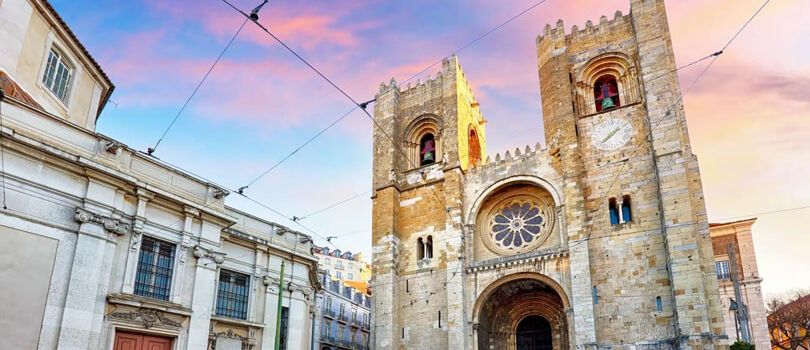
The Lisbon Cathedral, also known as the Sé de Lisboa (Lisbon Cathedral in Portuguese), is one of the most significant historical and architectural landmarks in the city. It stands as the oldest and most important church in Lisbon, embodying the city’s rich cultural and religious heritage. With its imposing Romanesque structure and rich history, the cathedral has witnessed centuries of significant events in Lisbon's past.
How to Reach Lisbon Cathedral, Lisbon
Located in the heart of the Alfama district, Lisbon Cathedral is easily accessible by various modes of transportation. Here’s how to reach it:
- By Tram: The most convenient tram to get to the Lisbon Cathedral is Tram 28. It passes through the historic districts of Lisbon, and the "Sé" stop is just a short walk from the cathedral.
- By Metro: The closest metro station to Lisbon Cathedral is "Baixa-Chiado," on the Blue and Green lines. From there, you can take a 10-minute walk to the cathedral.
- By Bus: Several buses stop near the cathedral. Buses 737, 782, and 783 all have stops at "Largo da Sé" or "Castelo," which are very close to the cathedral.
- By Foot: If you're staying in central Lisbon, you can enjoy a scenic walk through the charming Alfama neighborhood, which leads directly to the cathedral.
- By Car: Although driving in Lisbon is possible, it's important to note that parking can be challenging, especially in the Alfama area. It's recommended to use public transport or walk to avoid the hassle of finding parking.
Weather at Lisbon Cathedral
Lisbon has a Mediterranean climate, which makes it an ideal destination for year-round visits. Here’s a breakdown of what to expect weather-wise when visiting Lisbon Cathedral:
- Spring (March to May): Spring is one of the best times to visit Lisbon, with mild temperatures ranging from 15°C (59°F) to 22°C (72°F). The weather is pleasant, and it’s not as crowded as during the summer months.
- Summer (June to August): Summer in Lisbon can be quite hot, with temperatures often exceeding 30°C (86°F). If you're visiting during this time, be sure to wear light clothing, stay hydrated, and visit the cathedral in the early morning or late afternoon to avoid the midday heat.
- Autumn (September to November): Autumn offers moderate temperatures between 18°C (64°F) and 25°C (77°F). The weather is still pleasant, and the city is less crowded than in the summer months.
- Winter (December to February): Winters are mild, with temperatures ranging from 8°C (46°F) to 15°C (59°F). While it's not cold, Lisbon experiences occasional rain, so it’s a good idea to bring a light jacket and an umbrella.
Why Lisbon Cathedral is Famous
Lisbon Cathedral is famous for several reasons, making it an essential part of the city’s cultural and religious landscape:
- Historical Significance: Lisbon Cathedral is the oldest church in the city, with a history dating back to the 12th century. It was built shortly after Lisbon was conquered by the Christians in 1147 and has served as the seat of the Archbishop of Lisbon for centuries.
- Architectural Style: The cathedral features a blend of Romanesque, Gothic, and Baroque architectural styles. Its massive, imposing structure stands out as one of Lisbon’s most iconic buildings.
- Religious Importance: As the principal cathedral of Lisbon, it holds great significance for both religious pilgrims and tourists. It is also the site of many important ceremonies, including royal weddings and coronations throughout Portuguese history.
- Art and Artifacts: The cathedral houses an impressive collection of religious art and artifacts, including altarpieces, sculptures, and stained-glass windows, making it a must-visit for art and history lovers.
Entry and Visit Details about Lisbon Cathedral
The Lisbon Cathedral is open to the public year-round, allowing visitors to explore its stunning interior and learn about its history. Here are the essential details for your visit:
Opening Hours: The cathedral is open daily from 9:00 AM to 7:00 PM, with shorter hours on Sundays (11:00 AM to 7:00 PM) due to religious services. It’s important to check for any changes in opening hours during religious holidays or special events.
Entry Fees: Admission to Lisbon Cathedral is free. However, there is a fee for visiting certain sections of the cathedral, such as the cloister and the treasury. The cost of entry to these areas is around €4 to €6 for adults. Discounts are available for students and seniors, and children under the age of 10 can enter for free.
Guided Tours: If you wish to explore the cathedral’s rich history in greater depth, consider booking a guided tour. These tours are available in multiple languages and offer detailed explanations about the cathedral’s history, architecture, and significance. Audio guides are also available for those who prefer a self-guided experience.
History of Lisbon Cathedral
Lisbon Cathedral, originally known as Sé Patriarcal de Lisboa, was built between 1147 and 1170, shortly after the Christian reconquest of the city by King Afonso I of Portugal. It was constructed on the site of a former mosque and was intended to be the center of Christian worship in the newly conquered city. The cathedral was designed in a Romanesque style, with a strong defensive aspect to protect against possible attacks.
Over the centuries, the cathedral has undergone various modifications and restorations, reflecting the different architectural styles that have influenced Lisbon, including Gothic, Manueline, and Baroque elements. Despite these changes, the cathedral retains much of its original Romanesque character, particularly its façade and the structure of the interior.
Architecture of Lisbon Cathedral
The architectural design of Lisbon Cathedral is a fascinating blend of Romanesque, Gothic, and Baroque influences. The cathedral features thick stone walls, buttresses, and massive towers, which give it a fortress-like appearance. The main entrance is marked by a grand Romanesque portico, with intricate carvings depicting scenes from the Bible.
Inside the cathedral, the layout is simple but imposing. The interior features a three-aisled nave with massive columns supporting the vaulted ceiling. The cathedral is known for its beautiful altarpieces, intricate stained-glass windows, and the medieval cloister that surrounds the courtyard. The Treasury of the Cathedral houses a collection of religious artifacts, including liturgical objects, paintings, and sculptures.
Things to Do at Lisbon Cathedral
When visiting Lisbon Cathedral, there are several things you can do to enhance your experience:
- Admire the Architecture: Take your time to explore the stunning architectural features of the cathedral, including its Romanesque portico, Gothic arches, and Baroque chapels.
- Visit the Treasury: The cathedral’s treasury is home to a wealth of religious art, including paintings, sculptures, and relics. It’s an excellent place to learn about the religious and artistic history of Lisbon.
- Explore the Cloister: The peaceful cloister, dating back to the 14th century, is a beautiful place to relax and enjoy the serene atmosphere.
- Attend Mass: If you’re in Lisbon on a Sunday, consider attending a traditional Catholic mass at the cathedral. It’s a great way to experience the local culture and feel the spiritual significance of the cathedral.
Facts and Tips about Lisbon Cathedral
- Fact 1: Lisbon Cathedral is the oldest church in the city and has been the seat of the Archbishop of Lisbon for centuries.
- Fact 2: The cathedral was originally built to withstand attacks, and its fortress-like design reflects its defensive purpose.
- Tip 1: Arrive early to avoid crowds, especially during the summer months or on religious holidays.
- Tip 2: Wear comfortable shoes, as there are several stairs to climb and uneven floors inside the cathedral.
- Tip 3: Don’t forget to visit the cloister and treasury to fully appreciate the cathedral’s history and art.