"Experience the rich heritage of Assam's royal tomb."
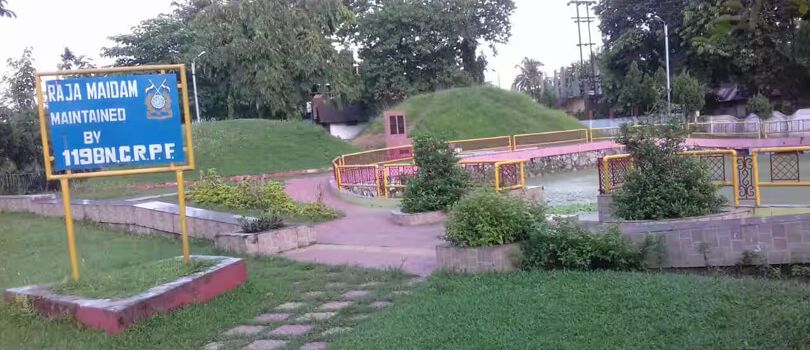
Raja Maidam is an important historical and archaeological site located in Jorhat district, Assam. It is closely associated with the Ahom dynasty, which ruled Assam for nearly six hundred years. The term “Maidam” refers to royal burial mounds, similar to pyramids, where Ahom kings and nobles were laid to rest. Raja Maidam in Jorhat stands as a silent reminder of the glorious Ahom era and reflects the deep respect given to royalty even after death. Surrounded by greenery and a peaceful atmosphere, Raja Maidam attracts history lovers, researchers, and tourists seeking to explore Assam’s royal past.
Why Raja Maidam is Famous in Jorhat, Assam
Raja Maidam is famous for its historical significance and its association with the Ahom kings. It represents the unique burial system of the Ahom dynasty, which combined religious beliefs, royal traditions, and architectural skills. The site is known for its earthen mound structure, underground chambers, and symbolic importance. Raja Maidam is also valued for its calm and respectful environment, making it an ideal place for heritage tourism and historical exploration.
History of Raja Maidam, Jorhat
The history of Raja Maidam dates back to the Ahom period, which began in the 13th century when the Ahoms established their rule in Assam. The Ahom kings followed a unique tradition of constructing maidams as royal burial sites. These structures were built to honor deceased kings, queens, and high-ranking nobles.
Raja Maidam in Jorhat is believed to be associated with prominent Ahom rulers and members of the royal family. The burial ceremonies were elaborate, and items such as weapons, ornaments, utensils, and personal belongings were often placed inside the chambers. Over time, many maidams were damaged due to natural causes and human activities, but Raja Maidam remains an important symbol of Ahom heritage.
Architecture and Structure of Raja Maidam
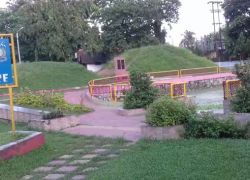
The architecture of Raja Maidam is distinct and symbolic. The structure mainly consists of a large earthen mound with an underground burial chamber. The chamber was constructed using bricks and stones, designed to remain hidden and protected. The mound shape represents stability and respect, reflecting the Ahom belief in life after death.
Unlike temples or palaces, Raja Maidam does not feature decorative carvings. Its architectural strength lies in its simplicity, symmetry, and spiritual meaning. The surrounding area often includes smaller mounds and pathways, indicating the presence of additional burial sites or ceremonial spaces.
How to Reach Raja Maidam, Jorhat, Assam
Raja Maidam is easily accessible from Jorhat town.
By Road: Jorhat is well connected by road to Guwahati and other major towns in Assam. From Jorhat town, visitors can reach Raja Maidam by taxi, auto-rickshaw, or private vehicle.
By Rail: Jorhat Town Railway Station is the nearest railway station. From the station, local transport options are available to reach the site.
By Air: Jorhat Airport (Rowriah Airport) is the nearest airport, with regular flights from Guwahati and other cities. From the airport, Raja Maidam can be reached by road within a short time.
Weather and Best Time to Visit Raja Maidam
The site can be visited throughout the year, but some seasons offer better comfort.
Summer (March to June): Summers are warm and humid, with temperatures between 25°C and 35°C.
Monsoon (July to September): The area becomes green and fresh, but rainfall may make the ground muddy.
Winter (October to February): Winter is the best time to visit, with pleasant weather and temperatures ranging from 10°C to 25°C.
Timings of Raja Maidam, Jorhat
Raja Maidam is generally open from morning to evening. Although there are no strict official timings, visiting between 8:00 AM and 5:00 PM is recommended for safety and better visibility.
Entry and Visit Details of Raja Maidam
There is usually no entry fee to visit Raja Maidam. The site is open to the public and maintained as a protected heritage area. Visitors are expected to respect the site and avoid any activities that could damage the structure.
Things to Do at Raja Maidam
Heritage Exploration: Learn about Ahom burial traditions and royal history.
Photography: Capture the peaceful landscape and historical structure.
Walking Tours: Take a slow walk around the site and enjoy the calm environment.
Educational Visits: Ideal for students and researchers interested in Assam’s history.
Quiet Reflection: Experience the serene atmosphere of this historic site.
Interesting Facts about Raja Maidam
Maidams are often compared to pyramids due to their burial purpose.
The Ahom dynasty ruled Assam for nearly 600 years.
Raja Maidam reflects ancient beliefs about life after death.
Many maidams were built secretly to protect royal remains.
The site is an important example of Assam’s royal heritage.
Travel Tips for Visiting Raja Maidam, Jorhat
Visit during winter for the best experience.
Wear comfortable footwear as the ground may be uneven.
Do not climb or dig around the mound.
Maintain silence and respect the historical importance.
Avoid littering and keep the site clean.
Hire a local guide for deeper historical understanding.
Conclusion
Raja Maidam in Jorhat, Assam, is a remarkable heritage site that offers a glimpse into the royal traditions and burial practices of the Ahom dynasty. With its historical importance, simple yet powerful architecture, and peaceful surroundings, it stands as a valuable cultural treasure. A visit to Raja Maidam is a meaningful journey into Assam’s past and an essential stop for anyone interested in history and heritage tourism.






























Jorhat
Jorhat
Jorhat
Jorhat
Jorhat
Jorhat
Jorhat
Jorhat