"Sacred site with a revered ancient tree."
Kalutara Bodhiya is one of the most sacred Buddhist pilgrimage sites in Sri Lanka and a major religious landmark located in the town of Kalutara, not far from Mount Lavinia and Colombo. It is a highly respected spiritual destination, visited by thousands of devotees and travelers who come to pray, meditate, and experience a place deeply rooted in Sri Lankan Buddhist heritage. Although it is often associated with Kalutara town, it is easily accessible for visitors staying in nearby Mount Lavinia and serves as one of the most popular Buddhist temples to explore in the western coastal region.
Kalutara Bodhiya is widely recognized for its holy Bodhi Tree, ancient origins, distinctive architectural beauty, and the large white dagoba (stupa) that can be seen from the main coastal road. It holds immense cultural, religious, and historical value and continues to be a living center of worship, charity, and communal gathering.
History of Kalutara Bodhiya
The history of Kalutara Bodhiya dates back more than 2,000 years and is closely connected to the introduction of Buddhism in Sri Lanka during the reign of King Devanampiyatissa in the 3rd century BCE. According to historical accounts, one of the 32 saplings taken from the sacred Sri Maha Bodhi Tree in Anuradhapura was planted at this location. Over time, the Bodhi Tree became a revered site of worship, and Kalutara developed into a key monastic center and spiritual landmark.
During the colonial Portuguese and Dutch periods, the area surrounding the Bodhiya came under foreign occupation. The region was used for military and administrative purposes, and many religious elements were neglected or damaged. During the British era, Kalutara Fort was located adjacent to the Bodhiya, and for some time, government offices were built nearby.
The revival of Kalutara Bodhiya came in the 20th century when Buddhist leaders and devotees worked to restore its religious significance. The construction of the impressive Kalutara Dagoba and the development of temple buildings transformed the site back into a major religious landmark. Today, Kalutara Bodhiya is one of the most visited religious shrines in Sri Lanka and an important symbol of Buddhist cultural resurgence in the country.
Architecture of Kalutara Bodhiya
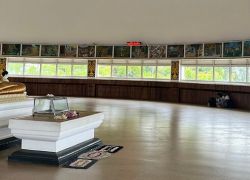
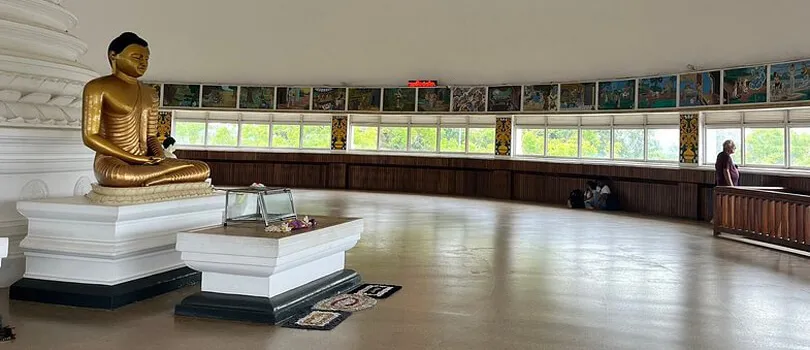
The architecture of Kalutara Bodhiya is one of its most striking features. The iconic white dagoba, visible from the main highway, is one of the few hollow stupas in Sri Lanka that can be entered and explored from within. The interior of the dagoba includes Buddhist murals, statues, and images depicting the life of the Buddha as well as various spiritual teachings.
Surrounding the main dagoba are several smaller shrines, meditation areas, prayer halls, and pavilions. The Bodhi Tree stands in a protected courtyard, surrounded by flower offerings, lamps, and stone structures that reflect ancient Sri Lankan temple architecture. Traditional motifs such as moonstones, stone carvings, murals, and Buddha images enhance the visual appeal of the temple. The layout reflects the calm and harmony expected in Buddhist temple design, offering spaces for both worship and peaceful contemplation.
Why is Kalutara Bodhiya Famous?
Kalutara Bodhiya is famous for several important reasons:
- It is home to one of the original Bodhi saplings from the sacred Sri Maha Bodhi Tree in Anuradhapura, making it one of the oldest living Buddhist religious sites in Sri Lanka.
- The large Kalutara Dagoba is one of the few hollow stupas in the world and a significant architectural attraction.
- It has been a symbol of Buddhist revival and public worship since the 20th century.
- The temple is known for its charitable work, community service, and educational programs that support local development and spiritual growth.
- Positioned along the scenic Galle–Colombo Road, it is a major pilgrimage stop for locals traveling to and from the southern region of Sri Lanka.
How to Reach Kalutara Bodhiya
Kalutara Bodhiya is located approximately 35–40 km from Mount Lavinia and around 45 km from Colombo. It is easily accessible through multiple transport options:
By Road: Visitors can hire a taxi, Tuk-Tuk, or travel by private car along the coastal highway connecting Colombo, Mount Lavinia, and Kalutara.
By Bus: Frequent buses operate between Colombo, Mount Lavinia, and Kalutara. Travelers can get down near the temple junction, which is just a short walk away.
By Train: Kalutara Railway Station is located close to the shrine, and trains running along the coastal route provide convenient access for both local and international visitors.
Weather at Kalutara Bodhiya
Kalutara and Mount Lavinia experience a tropical coastal climate throughout the year, making the site suitable for visits in any season. Average daily temperatures range between 27°C and 32°C. The area receives two monsoons—May to September and November to December—during which occasional rainfall can be expected. The best months for outdoor sightseeing are December to April, when humidity is lower and the weather is generally pleasant.
Entry and Visit Details
Kalutara Bodhiya is open throughout the day, from early morning until late evening. Entry is free for all visitors, regardless of nationality. Donations are appreciated and used for the upkeep of the temple buildings, social initiatives, and charity services. Visitors must dress respectfully, remove shoes before entering sacred areas, and maintain proper behavior while inside temple grounds.
Things to Do at Kalutara Bodhiya
Visitors can engage in several spiritual and cultural experiences, including:
1. Offer Prayers: Devotees may offer flowers, incense, and oil lamps at the Bodhi Tree as acts of religious devotion.
2. Explore the Hollow Stupa: The unique interior of the Kalutara Dagoba is a highlight, with murals and statues narrating Buddhist spiritual teachings.
3. Meditate and Reflect: Quiet corners and shaded spaces are ideal for contemplation and meditation.
4. Observe Rituals: Daily worship ceremonies and chanting sessions offer an authentic experience of Sri Lankan Buddhist practice.
5. Take in Scenic Views: The temple’s location near the river and sea provides peaceful surroundings and scenic photo opportunities.
Interesting Facts About Kalutara Bodhiya
- It is one of the few temples in Sri Lanka with a hollow stupa that visitors can enter.
- The Bodhi Tree is believed to be over two millennia old and directly connected to the sacred Sri Maha Bodhi in Anuradhapura.
- The temple’s roadside white stupa is one of the most photographed Buddhist landmarks on the Colombo–Galle route.
- The temple has long been associated with Buddhist welfare activities supporting the local community.
Tips for Visiting Kalutara Bodhiya
- Wear modest clothing covering shoulders and knees as a sign of respect.
- Remove hats and footwear before entering temple buildings and sacred sites.
- Visit early morning or at sunset for a calm and spiritually uplifting experience.
- Photography is allowed in most areas, but visitors should avoid taking pictures during prayers unless permitted.
- Carry water and sun protection if visiting during daytime hours.
Kalutara Bodhiya stands as a shining example of Sri Lanka’s religious heritage, offering serenity, culture, and deep spiritual symbolism. Whether you are a pilgrim seeking blessings or a traveler exploring the cultural heart of the western coast, a visit to this sacred landmark promises a meaningful and memorable experience not far from Mount Lavinia and Colombo.
Mount Lavinia
Mount Lavinia