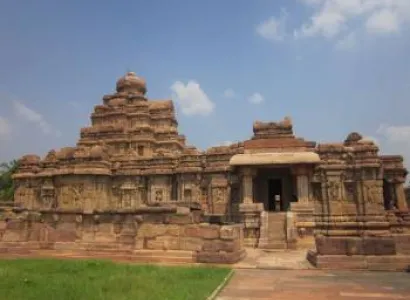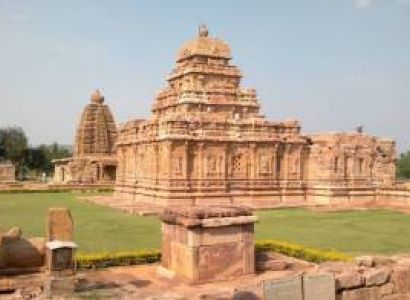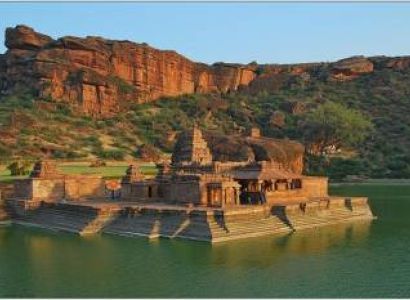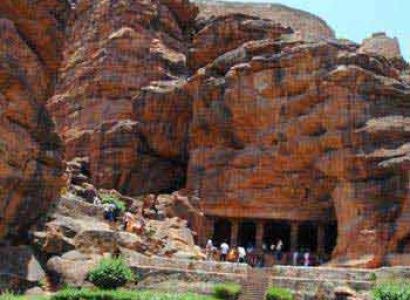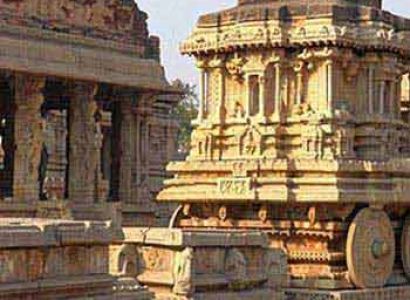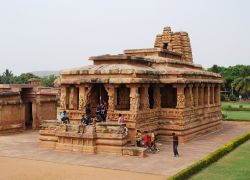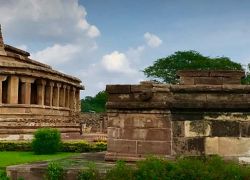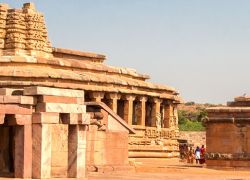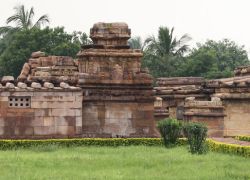
"Historical temple with intricate carvings."
The Hucchimalli Temple is one of the ancient and historically important temples located in Aihole, Karnataka. Aihole is widely known as the “Cradle of Indian Temple Architecture,” and Hucchimalli Temple forms a significant part of this remarkable heritage landscape.
Situated near the banks of the Malaprabha River, this temple showcases early Chalukyan architectural experimentation and reflects the evolution of Hindu temple design in South India. It is a peaceful and lesser-crowded site ideal for history enthusiasts and cultural explorers.
Hucchimalli Temple, Aihole, Karnataka is an important archaeological monument that highlights the artistic brilliance and architectural innovation of the Early Chalukya dynasty.
History of Hucchimalli Temple
The Hucchimalli Temple dates back to the 7th–8th century CE during the rule of the Early Chalukyas of Badami. The Chalukyas were great patrons of art and architecture, and Aihole served as their experimental ground for temple construction.
This temple was built during a period when artisans were exploring different architectural styles before finalizing the designs seen in later temples at Pattadakal and Badami.
Although the exact deity of worship is debated, it is believed that the temple was dedicated to Lord Shiva or another Hindu deity from the Shaivite tradition.
Architecture of Hucchimalli Temple
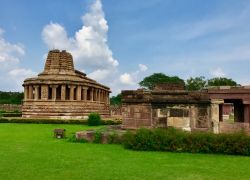
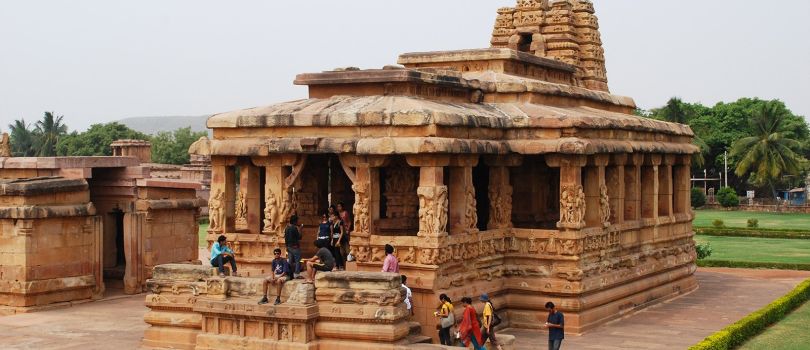
Hucchimalli Temple is a fine example of early Chalukyan architecture. It is built using sandstone and showcases simple yet elegant structural design elements.
The temple consists of a sanctum (garbhagriha), a small mandapa (hall), and minimal decorative carvings. Compared to later temples, the ornamentation here is modest, reflecting an early stage of architectural evolution.
The temple’s layout highlights experimentation with proportions, pillar styles, and roof structures. Some elements show early attempts at developing shikhara (tower) designs.
The stone craftsmanship, though simple, reflects precision and the beginning of a refined temple-building tradition in India.
Why Hucchimalli Temple is Famous
Hucchimalli Temple is famous for being part of Aihole’s early temple architecture experiments under the Chalukyas.
It represents one of the foundational stages of Indian structural temple design and is studied by historians and archaeologists for its simplicity and historical value.
The temple is also known for its peaceful surroundings and its location within a UNESCO-recognized heritage zone.
How to Reach Hucchimalli Temple
Aihole is well connected to major towns and cities in Karnataka.
By Air: The nearest airport is Hubli Airport, approximately 140 km away. From there, taxis and buses are available to Aihole.
By Train: The nearest railway station is Badami Railway Station, around 35 km away. From Badami, local transport can be used to reach Aihole.
By Road: Aihole is connected by road to Badami, Pattadakal, Bijapur, and other nearby towns. Regular KSRTC buses and private taxis operate frequently.
Hucchimalli Temple is located within the Aihole temple complex and can be easily reached by walking.
Weather at Hucchimalli Temple
Aihole experiences a semi-arid climate with hot summers and moderate monsoons.
Summer (March to June): Hot and dry with temperatures ranging from 30°C to 42°C.
Monsoon (July to September): Moderate rainfall brings slight relief and greenery to the region.
Winter (October to February): The best season for visiting, with pleasant temperatures ranging from 15°C to 28°C.
Timing and Entry Details
Hucchimalli Temple is open to visitors from 6:00 AM to 6:00 PM every day.
There is usually no entry fee, as it is part of the protected archaeological site of Aihole.
Daytime visits are recommended for better visibility of architectural details.
Things to Do at Hucchimalli Temple
Visitors can explore the ancient ruins and observe early Chalukyan architectural techniques.
Photography enthusiasts can capture stone structures, carvings, and the surrounding temple landscape.
History lovers can study the evolution of temple architecture in Aihole’s experimental phase.
Visitors can also explore nearby temples such as Durga Temple, Lad Khan Temple, and other monuments in Aihole.
Interesting Facts About Hucchimalli Temple
Aihole is known as the “Cradle of Indian Temple Architecture,” and Hucchimalli Temple is part of this legacy.
The temple represents one of the earliest structural temple experiments by the Chalukyas.
It is part of a larger UNESCO heritage zone that includes Badami and Pattadakal.
The temple is relatively less crowded, offering a peaceful exploration experience.
Travel Tips for Visitors
Wear comfortable footwear as the site involves walking on uneven stone surfaces.
Carry water and sun protection due to high temperatures in summer.
Visit early morning or late afternoon for better lighting and comfortable weather.
Hiring a guide is recommended for better understanding of historical significance.
Conclusion
Hucchimalli Temple in Aihole is a valuable piece of India’s architectural history. Its simplicity and early design elements make it an important monument in understanding the evolution of temple architecture.
For history lovers, architecture enthusiasts, and cultural explorers, this temple offers a meaningful glimpse into the origins of Indian structural temples.