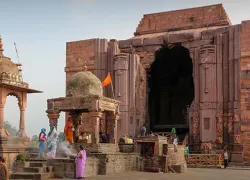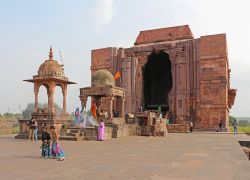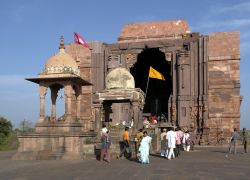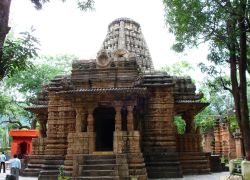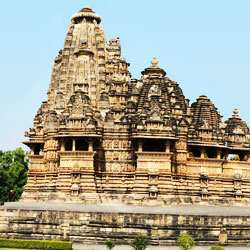
"Architectural marvel dedicated to Lord Shiva"
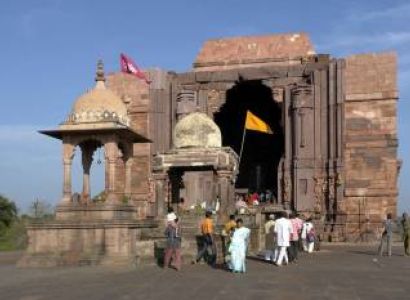
The Bhojeshwar Temple is one of the most remarkable and incomplete yet magnificent Hindu temples in India, dedicated to Lord Shiva. It is admired for its massive Shiva Linga, extraordinary stone architecture, and historical importance. Located in the ancient town of :contentReference[oaicite:0]{index=0}, the temple stands as a powerful symbol of India’s medieval engineering brilliance and devotion.
Known as :contentReference[oaicite:1]{index=1}, this temple attracts historians, archaeologists, devotees, and travelers from across the world who come to witness its grand yet unfinished structure.
History of Bhojeshwar Temple
The Bhojeshwar Temple was constructed in the 11th century during the reign of the Paramara king Raja Bhoja, one of the most celebrated rulers of central India. The temple is believed to have been started around 1010–1050 AD.
According to historical records, Raja Bhoja envisioned a grand Shiva temple that would reflect divine architecture and unmatched engineering skill. However, due to unknown reasons—possibly war, shortage of resources, or geological issues—the construction was never completed.
Despite being unfinished, the temple continues to stand tall as a testament to ancient Indian craftsmanship and devotion. It is often called the “Somnath of the East” due to its grandeur and spiritual importance.
Architecture of Bhojeshwar Temple
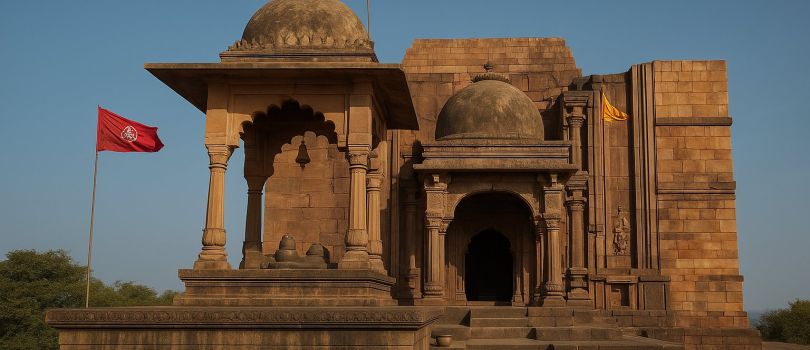
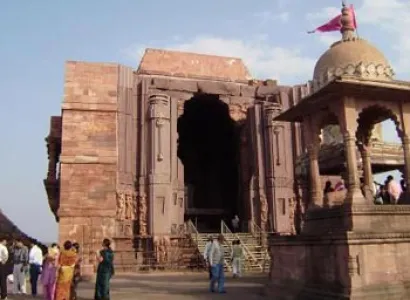
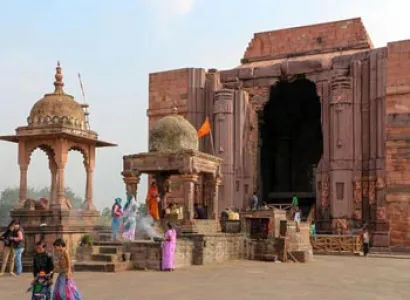
The Bhojeshwar Temple is famous for its massive and unfinished structure. Built using sandstone blocks weighing several tons, it showcases early Nagara-style temple architecture.
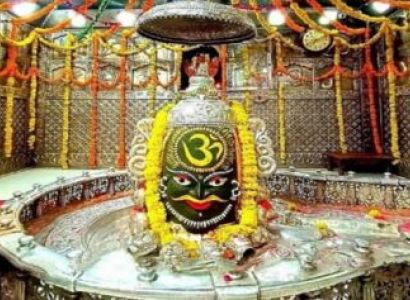
The most striking feature is the enormous Shiva Linga, one of the largest in India, measuring around 7.5 feet high and 17.8 feet in circumference. It is carved from a single stone and remains the central focus of worship.
The temple platform is raised on a massive square base, and the incomplete walls give a unique open-sky appearance. Engineering experts still study the precision of stone cutting and placement used in its construction.
The temple does not have a roof, which makes it distinct from most Indian temples. This unfinished structure allows visitors to clearly observe the original construction techniques of the medieval period.
Why Bhojeshwar Temple is Famous
The Bhojeshwar Temple is famous for its gigantic Shiva Linga, historical significance, and unfinished architectural brilliance. It represents the ambition of Raja Bhoja and the advanced engineering skills of ancient India.
It is also a major pilgrimage site for Shiva devotees, especially during Maha Shivratri, when thousands of devotees gather to offer prayers.
The temple is additionally known for its archaeological importance, attracting researchers and historians who study its incomplete structure to understand ancient construction techniques.
How to Reach Bhojeshwar Temple
The temple is well connected by road and accessible from major cities in Madhya Pradesh.
By Air: The nearest airport is Raja Bhoj Airport in Bhopal, located around 30 km away. Taxis and buses are easily available from the airport to Bhojpur.
By Train: The nearest railway station is Bhopal Junction, which is well connected to major Indian cities such as Delhi, Mumbai, and Indore. From Bhopal, visitors can take a cab or bus to reach the temple.
By Road: Bhojpur is well connected by road to Bhopal and nearby towns. Regular buses, taxis, and private vehicles operate frequently.
Weather at Bhojeshwar Temple
The region experiences a typical central Indian climate. Summers (March to June) are hot, with temperatures reaching up to 42°C. Monsoon season (July to September) brings moderate to heavy rainfall, making the surroundings lush green.
Winters (October to February) are the best time to visit, with pleasant temperatures ranging from 10°C to 25°C, making sightseeing comfortable and enjoyable.
Timing and Entry Details
The Bhojeshwar Temple is generally open from 6:00 AM to 7:00 PM every day.
There is usually no entry fee for visitors. However, donations for temple maintenance and local heritage preservation are welcome.
Morning hours are considered the best time for darshan due to peaceful surroundings and less crowd.
Things to Do at Bhojeshwar Temple
Visitors can explore the massive Shiva Linga and observe the ancient stone architecture closely. The peaceful surroundings make it an ideal place for meditation and spiritual reflection.
Photography enthusiasts can capture the grandeur of the unfinished structure and surrounding natural beauty. Visitors can also explore nearby archaeological remains and learn about the history of Raja Bhoja.
During Maha Shivratri, the temple becomes a vibrant spiritual hub with special rituals, prayers, and cultural gatherings.
Interesting Facts About Bhojeshwar Temple
The Shiva Linga inside the temple is one of the largest in India and is still actively worshipped. The temple was never completed, yet it remains structurally stable even after 1000 years.
Another interesting fact is that the temple construction reveals advanced stone-cutting techniques that are still difficult to replicate today.
Archaeologists believe that if completed, it would have been one of the largest temples in India.
Travel Tips for Visitors
Visitors should wear comfortable clothing and footwear suitable for walking on uneven stone surfaces. Carry water, especially during summer visits.
It is recommended to visit early in the morning or late afternoon for better lighting and cooler weather. Respect religious customs and avoid climbing on protected structures.
Hiring a guide can enhance the experience by providing detailed historical and architectural insights.
Conclusion
The Bhojeshwar Temple is not just a religious site but also a masterpiece of ancient Indian architecture and engineering ambition. Its unfinished yet majestic structure tells a story of devotion, vision, and historical significance.
Whether you are a devotee, history lover, or traveler, visiting this temple offers a unique experience that connects you deeply with India’s rich cultural heritage.














Bhojpur
Bhojpur
Bhojpur
Bhojpur
Bhojpur
Bhojpur
Bhojpur