"Visit this ancient temple for spiritual enlightenment."
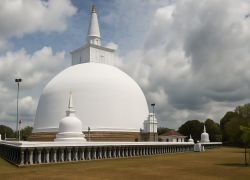
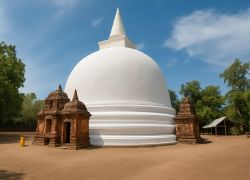
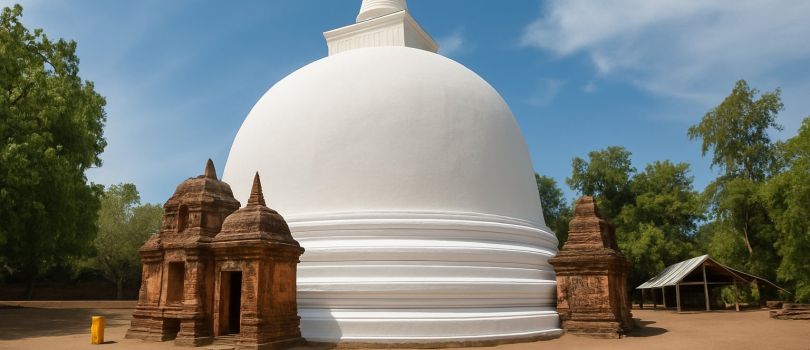
Kiri Vihara is an ancient Buddhist temple located in the historic city of Polonnaruwa, Sri Lanka. Known for its serene atmosphere, stunning architecture, and rich history, Kiri Vihara is one of the most significant religious sites in the city. This sacred temple, which dates back to the reign of King Parakramabahu I in the 12th century, is a remarkable example of the ancient Sinhalese architectural and artistic styles. The name "Kiri Vihara" translates to "Milk Temple," a reference to the pure white color of the stupa that stands as the central feature of the temple complex. The temple is still an important pilgrimage site for Buddhists and a key attraction for visitors to Polonnaruwa.
History of Kiri Vihara
Kiri Vihara was built during the reign of King Parakramabahu I, who was a great patron of Buddhism and renowned for his extensive contributions to the island’s religious and cultural heritage. The temple was constructed as part of his efforts to promote and preserve Buddhist teachings in the kingdom of Polonnaruwa. The stupa at Kiri Vihara is considered one of the finest examples of ancient Sri Lankan architecture.
The temple is believed to have originally housed relics of the Buddha, and it served as a place of worship and meditation for monks and pilgrims. The stupa was covered in a layer of white plaster, giving it its distinctive white appearance, symbolizing purity. Over the centuries, the temple has undergone several restorations, but it remains a key historical and cultural symbol in Sri Lanka. Today, Kiri Vihara continues to function as a place of spiritual significance and is often visited by both locals and tourists seeking a connection to Sri Lanka's rich Buddhist heritage.
Architecture of Kiri Vihara
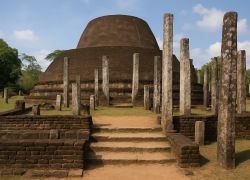
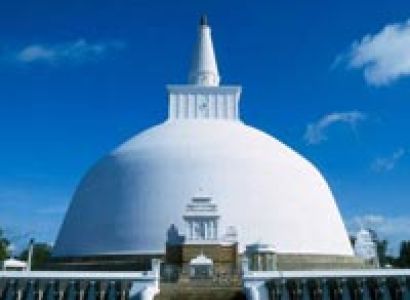
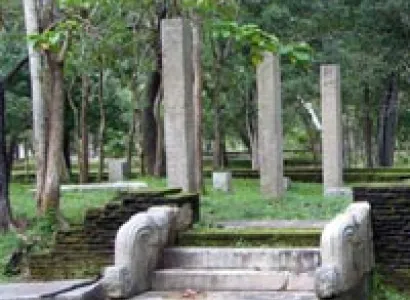
The architecture of Kiri Vihara is characterized by its simplicity and elegance, in keeping with the traditions of ancient Sri Lankan Buddhist temples. The most striking feature of the temple is the large, dome-shaped stupa that stands at its center. This stupa is surrounded by a stone walkway and a series of decorative stone pillars that add to the temple's serene beauty.
The stupa is built on a raised platform and is made from a combination of stone and brick. It is believed to have originally been covered with a layer of white plaster, which has since been restored in places. The surrounding area is well-maintained with lush greenery and a peaceful atmosphere that adds to the spiritual ambiance of the site.
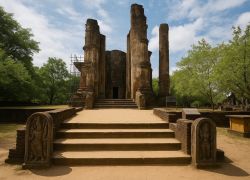
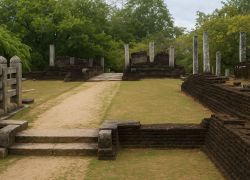
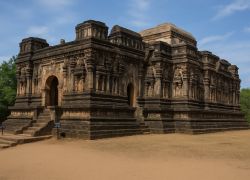
In addition to the stupa, Kiri Vihara also features several other important architectural elements, including small shrines and the remains of ancient monastic buildings. The temple complex is enclosed by a stone wall, which adds to the sense of tranquility and separation from the outside world, making it an ideal place for meditation and contemplation.
Why Kiri Vihara is Famous?
Kiri Vihara is famous for several reasons, making it one of the most important religious and historical sites in Polonnaruwa:
How to Reach Kiri Vihara
Kiri Vihara is located in the city of Polonnaruwa, which is easily accessible from various parts of Sri Lanka. Here are the best ways to reach the temple:
By Road: Polonnaruwa is about 216 kilometers from Colombo, the capital of Sri Lanka. The drive takes approximately 4-5 hours, depending on traffic. You can hire a taxi, take a private car, or use public transport to reach Polonnaruwa. Once in the city, Kiri Vihara is located within the ancient city’s archaeological park, and it is easy to reach by foot or tuk-tuk.
By Bus: Public buses run regularly from major cities such as Colombo, Kandy, and Anuradhapura to Polonnaruwa. The Polonnaruwa bus station is located near the entrance to the archaeological park, and Kiri Vihara is just a short walk from there.
By Train: The nearest train station to Polonnaruwa is in Habarana, which is approximately 45 kilometers away. From Habarana, you can take a taxi or bus to Polonnaruwa and then head to Kiri Vihara.
Weather at Kiri Vihara
Polonnaruwa has a tropical climate with distinct wet and dry seasons. The best time to visit Kiri Vihara is during the dry season, when the weather is pleasant and ideal for outdoor exploration.
Best Time to Visit: The dry season lasts from December to April, with sunny days and low humidity, making it the most favorable time for a visit. During this period, the weather is perfect for sightseeing and exploring the archaeological sites in Polonnaruwa.
Monsoon Season: The monsoon season lasts from May to October, and rainfall is more frequent during this time. Although the site remains accessible during the monsoon, the wet conditions may affect outdoor activities, and it is advisable to bring an umbrella or raincoat.
The average temperature in Polonnaruwa is between 25°C to 32°C (77°F to 90°F), so visitors should be prepared for warm weather throughout the year.
Timing of Kiri Vihara
Kiri Vihara, as part of the Polonnaruwa Archaeological Park, is open to visitors throughout the year. The temple itself can be visited at any time of day, though the best visiting hours are during the cooler parts of the day.
Opening Hours: 7:00 AM – 5:30 PM
It is advisable to visit early in the morning or late in the afternoon to avoid the midday heat and crowds. This is also the best time to enjoy the peaceful atmosphere and to capture photographs of the temple and its surroundings.
Entry and Visit Details
Visitors can access Kiri Vihara as part of the Polonnaruwa Archaeological Park. Entry to the park is ticketed, and the ticket includes access to various ancient sites, including Kiri Vihara, the Royal Palace, and the Gal Vihara rock temple.
Ticket Prices: The ticket for foreigners generally costs around USD 25-30, which grants access to all the major archaeological sites in Polonnaruwa.
Facilities: There are no significant facilities directly at Kiri Vihara, but nearby, visitors can find cafes, restaurants, and accommodations in Polonnaruwa for a comfortable stay. The city has options ranging from budget guesthouses to luxurious hotels.
Things to Do at Kiri Vihara
Facts About Kiri Vihara
Tips for Visiting Kiri Vihara
Kiri Vihara in Polonnaruwa is a must-visit destination for anyone interested in Sri Lanka's rich Buddhist heritage, architectural beauty, and peaceful ambiance. Whether you are a history enthusiast, a spiritual seeker, or a nature lover, Kiri Vihara offers a memorable experience that transports visitors back in time to the grandeur of ancient Sri Lanka.













Polonnaruwa